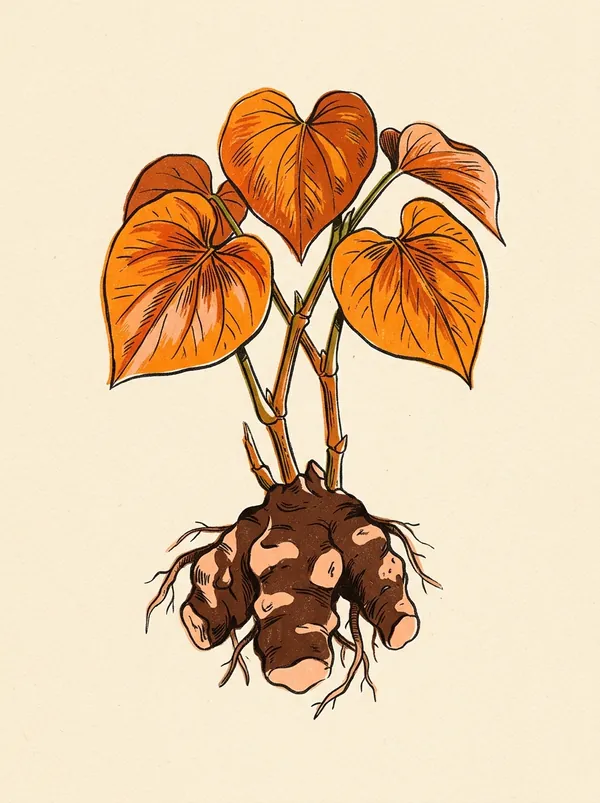
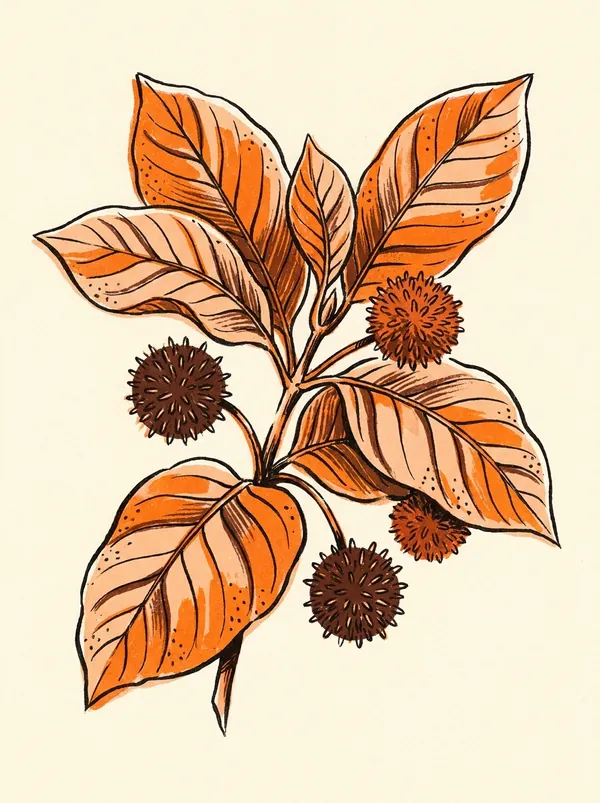
Both start with K, both turn up at the same kind of bar, and both get called “traditional.” That’s where the overlap ends. One is the root of a pepper plant, the other a leaf from a cousin of coffee, and they sit in very different legal spots. If you only read one row in this table, make it the legal one.
Side by side
| Feature | Kava | Kratom |
|---|---|---|
| Latin name | Piper methysticum | Mitragyna speciosa |
| Plant family / what it is | Piperaceae (pepper family), a shrub | Rubiaceae (coffee family), a tropical tree |
| Where it grows | Pacific islands: Vanuatu, Fiji, Tonga, Samoa, Hawaii | Thailand, Malaysia, Indonesia, Papua New Guinea |
| Part used | Root and lower stem | Leaf |
| Main compounds researchers study | Kavalactones (kavain, dihydrokavain, methysticin and others) | Indole alkaloids, mainly mitragynine; 7-OH in trace amounts |
| Common forms sold | Ground root, instant powder, shots, capsules, extracts, gummies | Leaf powder, capsules, liquid extracts, shots |
| How it’s usually taken | Ground root mixed with water and shared at Pacific ceremonies and gatherings | Fresh leaves traditionally chewed or brewed as tea in Southeast Asia |
| FDA position | Sold as a food and dietary supplement; 2002 consumer advisory on rare liver-injury reports | Not approved for any use; the FDA says it can’t be sold as a dietary supplement |
| Legal status in the US (Nov 2026) | Legal in all 50 states and DC | Not federally scheduled; banned in 11 states, regulated in many more |
| What to check on the label | Noble variety, root only, kavalactone %, batch COA | Whether it’s legal in your state; Latin name; COA listing mitragynine and 7-OH |
Which one fits what you’re after
If you care about
a ceremonial drink with a living tradition
→ Kava
Shared at welcomes and gatherings in Fiji, Vanuatu, Tonga and Samoa
If you care about
the simplest legal picture
→ Kava
Legal in every state; kratom is banned in 11
If you care about
how fast plant laws can move
→ Kratom
State bans and federal proposals have changed repeatedly since 2024
What I check on the label
- Kava: “noble” and “root” spelled out; tudei (two-day) varieties are generally avoided.
- Kava: kavalactone % on the panel, not just on the marketing copy.
- Kratom: Latin name Mitragyna speciosa and a COA that lists mitragynine and 7-OH separately.
- Both: a batch number that matches a lab report for heavy metals and microbes.
Is it legal where you live? Rules for kratom and 7-OH change by state and city. Check the state-by-state map on 7-OH Laws →
Common questions
Is kava the same as kratom?
No. Kava is a pepper-family root from the Pacific; kratom is a coffee-family tree leaf from Southeast Asia. Different plants, different compounds.
Is kava legal where kratom is banned?
Yes, as of Nov 2026 kava is legal in all 50 states and DC, including the 11 states that ban kratom.
Are kava and kratom related?
No. They are in different plant families (Piperaceae and Rubiaceae) and grow in different regions.
Is kratom FDA-approved?
No. The FDA hasn’t approved kratom for any use and says it can’t be lawfully sold as a dietary supplement or food ingredient.
Sources (6)
— Dan
Updated by Dan Mercer.