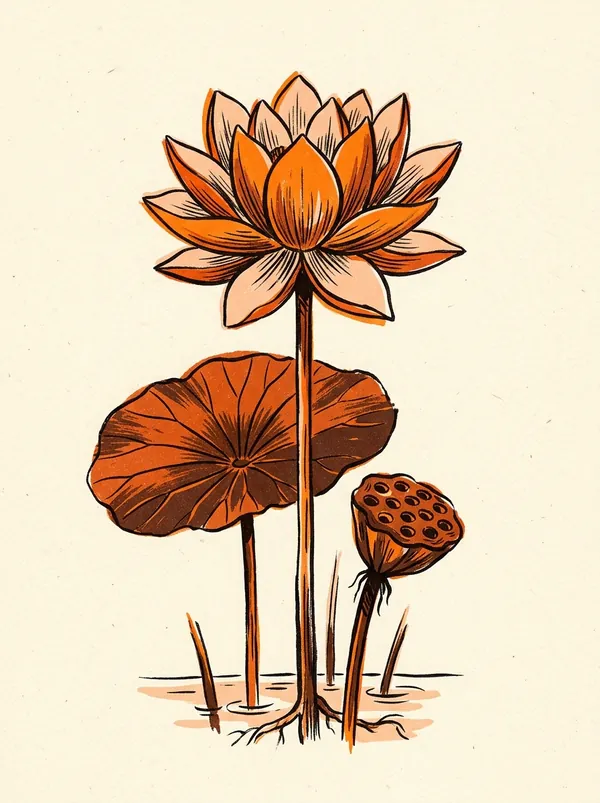
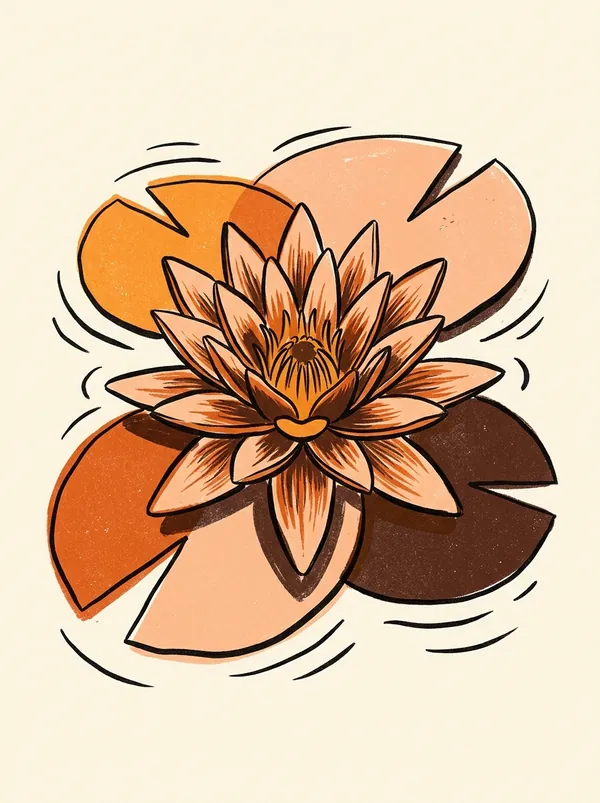
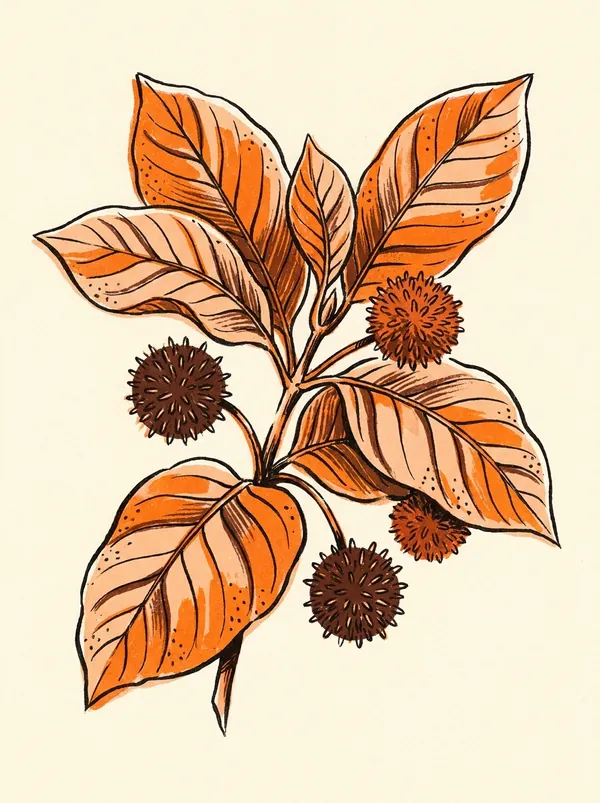
These two turn up in the same online roundups, usually with no explanation of why. One is a flower from the Nile; the other is a leaf from a tree in the coffee family. The surprise for me was on the blue lotus side: the compounds most often credited to it may barely be in the flower at all.
Side by side
| Feature | Blue lotus | Kratom |
|---|---|---|
| Latin name | Nymphaea caerulea | Mitragyna speciosa |
| Plant family / what it is | Nymphaeaceae (water lily family); not a true lotus | Rubiaceae (coffee family); a tropical tree |
| Where it grows | The Nile and parts of East Africa | Thailand, Malaysia, Indonesia, Papua New Guinea |
| Part used | Flower | Leaf |
| Main compounds researchers study | Aporphine alkaloids (nuciferine, apomorphine) are often cited, but a 2023 lab study found them virtually absent from authentic extracts | Indole alkaloids, mainly mitragynine; 7-OH in trace amounts |
| History | Painted and carved throughout ancient Egyptian art; flowers found in Tutankhamun’s tomb | Fresh leaves traditionally chewed or brewed as tea in Southeast Asia |
| Common forms sold | Dried flowers for tea, tinctures, extracts, capsules, gummies | Leaf powder, capsules, liquid extracts, shots |
| Federal status | Not federally controlled | Not federally scheduled; the FDA says it can’t be sold as a dietary supplement or food ingredient |
| Legal status by state (Nov 2026) | Louisiana lists it as a prohibited plant | Banned in 11 states, Louisiana included; regulated in many more |
| What to check on the label | Nymphaea caerulea named; flower; extract ratio; batch COA | Whether it’s legal in your state; Latin name; COA listing mitragynine and 7-OH |
Which one fits what you’re after
If you care about
a plant from ancient art and archaeology
Blue lotus
A recurring motif in Egyptian paintings and carvings
If you care about
more published chemistry
Kratom
Its alkaloids are a NIDA research topic; blue lotus research is thin
If you care about
the simpler legal picture
Blue lotus
Restricted in Louisiana; kratom is banned in 11 states
What I check on the label
- Blue lotus: Nymphaea caerulea on the panel. “Lotus” alone could mean a different plant.
- Blue lotus: big ratios like 50:1 describe concentration, not what compounds are present.
- Kratom: Latin name Mitragyna speciosa and a COA that lists mitragynine and 7-OH separately.
- Both: a batch COA. Louisiana residents: check state law first; it restricts both.
Is it legal where you live? Rules for kratom and 7-OH change by state and city. Check the state-by-state map on 7-OH Laws
Common questions
Is blue lotus the same as kratom?
No. Blue lotus is a water lily from the Nile (Nymphaea caerulea); kratom is a coffee-family tree leaf from Southeast Asia (Mitragyna speciosa). Different families, different compounds.
Do blue lotus and kratom have the same effects?
This notebook doesn’t compare effects. Here’s what the research has looked at: kratom’s alkaloids, mainly mitragynine, are well studied; blue lotus research is limited, and its often-cited compounds were virtually absent in a 2023 lab study.
Is blue lotus legal where kratom is banned?
Louisiana restricts both. Elsewhere, blue lotus isn’t federally controlled, while kratom is banned in 10 other states as of Nov 2026; see 7ohlaws.com/kratom/ for your state.
Does blue lotus contain nuciferine?
It’s widely said to, but a 2023 GC-MS study found nuciferine and apomorphine virtually absent from authentic blue lotus extracts. Research on the flower is limited.
Sources (6)
— Dan
Updated by Dan Mercer.