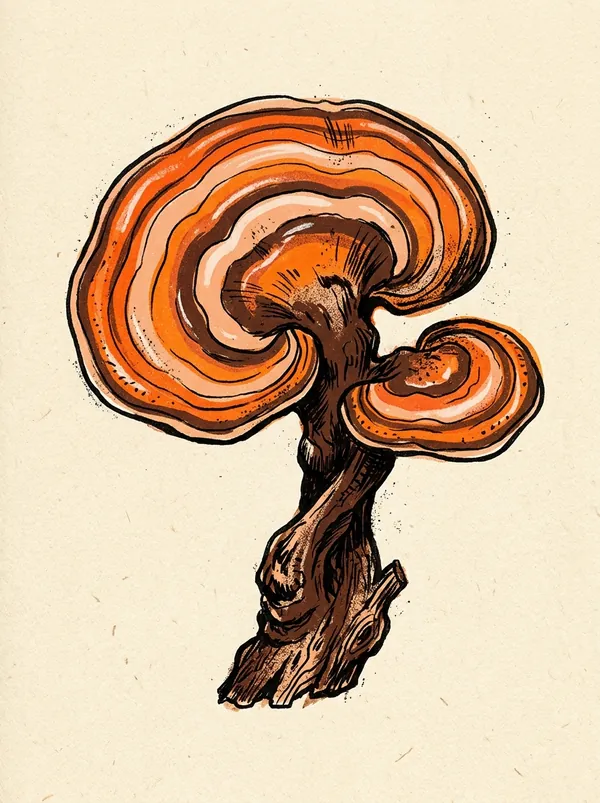
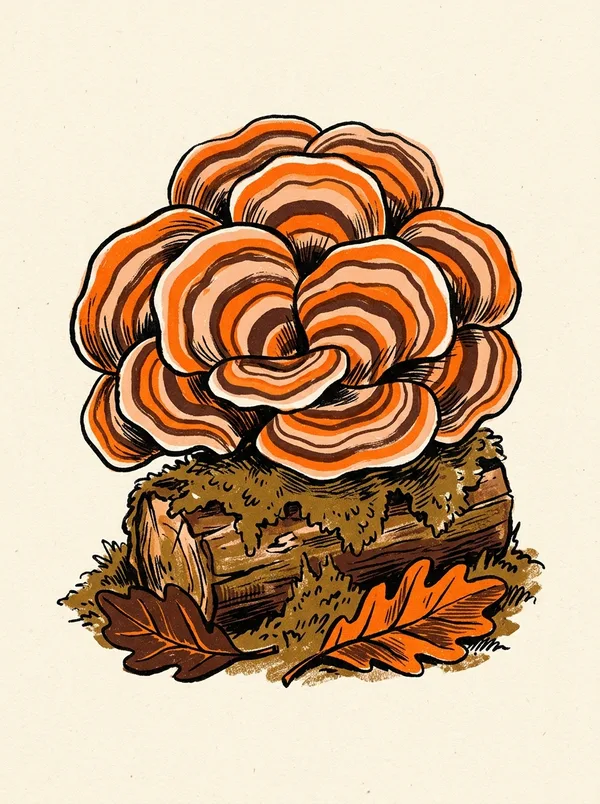
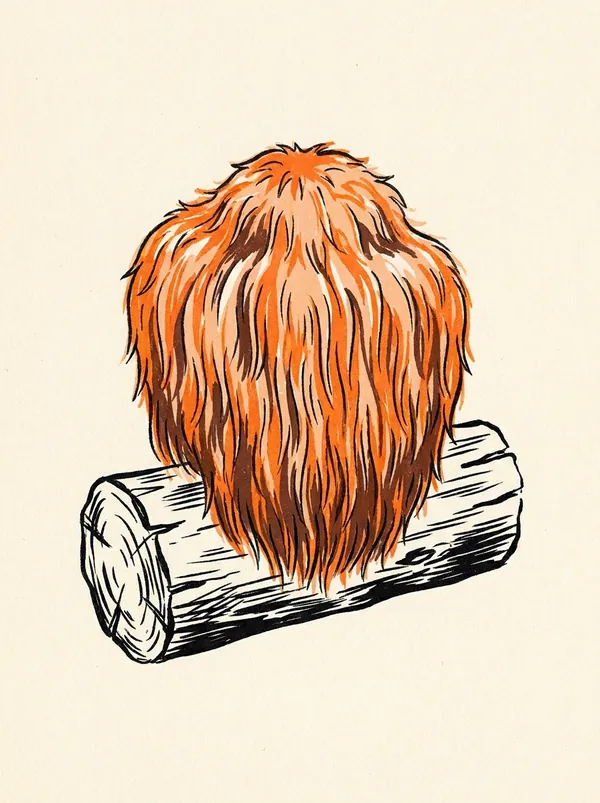
Turkey tail gets its name from its rings of brown and tan, which look like a fanned-out turkey tail. It’s woody, so it ends up in tea and extracts rather than in a pan. Lion’s mane is the opposite: soft, white and eaten as food. What sets turkey tail apart on paper is PSK, one specific extract that is an approved product in Japan. That’s a fact about one product, not about every turkey tail capsule.
Side by side
| Feature | Turkey tail | Lion’s mane |
|---|---|---|
| Latin name | Trametes versicolor (older name Coriolus versicolor) | Hericium erinaceus |
| Family / what it is | Polyporaceae; a woody bracket fungus with concentric brown-and-tan rings | Hericiaceae; a white, shaggy mushroom with hanging spines |
| Where it grows | On dead logs, worldwide | On dead or dying hardwood trees |
| Part used | Fruiting body and cultivated mycelium; PSK is a hot-water extract of cultivated mycelium | Fruiting body and mycelium |
| Main compounds researchers study | Protein-bound polysaccharides: PSK (from Japan) and PSP (from China), made from different strains | Hericenones (from the fruiting body) and erinacines (from the mycelium), plus polysaccharides |
| Regulatory note | NCI: PSK (Krestin) is an approved product in Japan, used there alongside standard cancer care; the FDA hasn’t approved Coriolus extracts for that use | Sold as a food and dietary supplement |
| Common forms sold | Tea, capsules, powders, extracts | Capsules, powders, liquid extracts, coffee blends, gummies |
| How it’s usually taken | Simmered as tea; known as yun zhi in Chinese medicine and kawaratake in Japan | Eaten as a culinary mushroom in East Asian cooking |
| Legal status in the US | Sold as a dietary supplement; not controlled | Sold as a food and dietary supplement; not controlled |
| Safety notes worth reading | MSK: dark stools and darkened fingernails reported; avoid in pregnancy and breastfeeding; may interact with some medicines | MSK: generally considered safe as food; supplements are more concentrated |
| What to check on the label | Fruiting body or mycelium, and what the mycelium was grown on; species named; batch COA | Fruiting body or mycelium, beta-glucan %, species named |
Which one fits what you’re after
If you care about
a mushroom that is also food
Lion’s mane
Eaten fresh, dried or cooked in East Asian cuisine
If you care about
a named extract with a regulatory record
Turkey tail
PSK is an approved product in Japan; NCI says it has been used there since the mid-1970s
If you care about
labels that tell you what’s inside
Either
Fruiting body vs mycelium, and what the mycelium was grown on
What I check on the label
- Turkey tail: Trametes versicolor or Coriolus versicolor on the panel. They’re the same species.
- Fruiting body or mycelium? A 2025 toxicology study tested powders of both species grown as mycelium on oats.
- PSK is a proprietary Japanese product; MSK notes PSP-type extracts are sold as supplements. The label should name which.
- Turkey tail: MSK suggests avoiding it in pregnancy and breastfeeding, and telling your doctor if you take medication.
Is it legal where you live? Rules for kratom and 7-OH change by state and city. Check the state-by-state map on 7-OH Laws
Common questions
Is turkey tail the same as lion’s mane?
No. Turkey tail (Trametes versicolor) is a woody bracket fungus; lion’s mane (Hericium erinaceus) is a soft, edible mushroom. Different families, different compounds.
What are PSK and PSP?
Protein-bound polysaccharides extracted from turkey tail. PSK (brand name Krestin) comes from Japan and PSP from China; NCI notes they were made from different strains and differ somewhat in sugar makeup.
Is PSK approved anywhere?
NCI describes PSK as an approved product in Japan, used there alongside standard cancer care. MSK notes the FDA hasn’t approved Coriolus extracts for that use. Store-bought turkey tail is sold as a dietary supplement.
Do turkey tail and lion’s mane have the same effects?
This notebook doesn’t compare effects. Here’s what research has looked at: turkey tail mainly for PSK and PSP, lion’s mane for hericenones and erinacines.
Are turkey tail and lion’s mane legal?
Yes. Both are sold as dietary supplements in the US and neither is a controlled substance.
Sources (6)
- NCI PDQ: Medicinal mushrooms (health professional version)
- Memorial Sloan Kettering, About Herbs: Coriolus versicolor (turkey tail)
- Habtemariam 2020, Trametes versicolor polysaccharides review (Biomedicines)
- Memorial Sloan Kettering, About Herbs: Lion’s mane
- Friedman 2015, Chemistry of Hericium erinaceus (J Agric Food Chem)
- Mahadevan et al. 2025, Toxicology of lion’s mane and turkey tail powders (Front Toxicol)
— Dan
Updated by Dan Mercer.