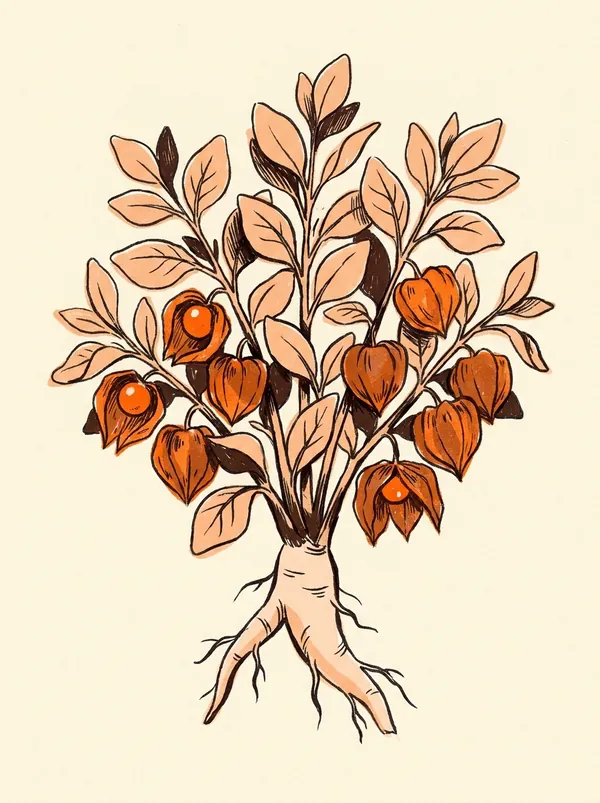
These two get sold side by side, sometimes in the same capsule, under the same vague wellness heading. Underneath, one is a fungus that grows on hardwood stumps and the other is a shrub root from Ayurvedic tradition. The rows I’d read first are part used and safety notes, because that’s where labels tend to go quiet.
Side by side
| Feature | Reishi | Ashwagandha |
|---|---|---|
| Latin name | Ganoderma lucidum (East Asian lingzhi is often named Ganoderma lingzhi) | Withania somnifera |
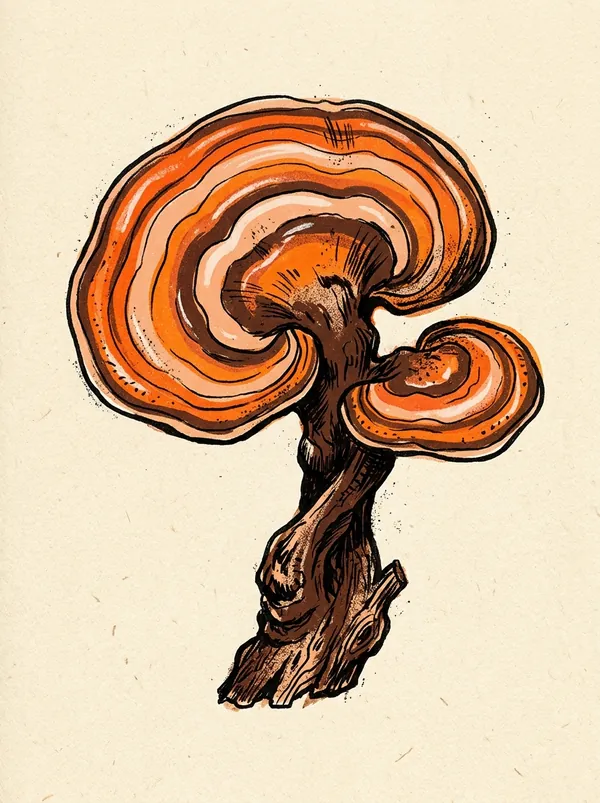
| Kingdom / family | A fungus; Ganodermataceae, a hard, glossy red-brown shelf fungus | A plant; Solanaceae (nightshade family), an evergreen shrub |
| Where it grows | On hardwood stumps and logs; most sold today is cultivated | Parts of India, Africa and the Middle East |
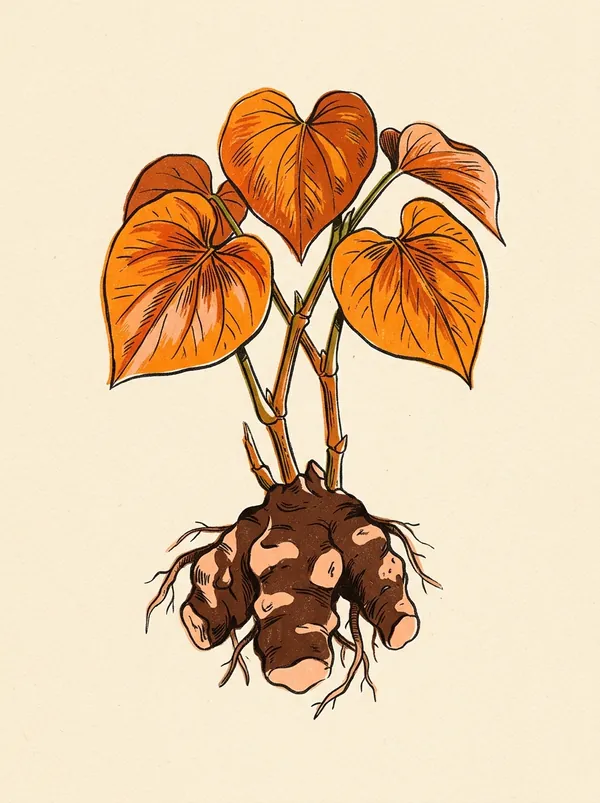
| Part used | Fruiting body, mycelium and spores | Root, leaf, or a root-and-leaf extract |
| Main compounds researchers study | Triterpenes such as ganoderic acids, and beta-glucan polysaccharides | Withanolides (steroidal lactones such as withaferin A), plus alkaloids and saponins |
| Common forms sold | Capsules, tablets, extracts, powders, teas, spore powder | Root powder, capsules, extracts, gummies |
| How it’s usually taken | Too woody to cook with; traditionally simmered as tea | Used in Ayurveda, India’s traditional medicine, for thousands of years |
| Legal status in the US | Sold as a dietary supplement; not controlled | Sold as a dietary supplement; not controlled |
| Outside the US | Rules vary by country | Denmark’s food authority has banned it, citing a 2020 risk assessment; the decision has been disputed |
| Safety notes worth reading | MSK: rare liver-injury reports; may raise bleeding risk with blood thinners; spore powder can raise the CA72-4 lab marker | NCCIH: rare liver-injury cases; avoid in pregnancy; not recommended with thyroid or autoimmune disorders |
| What to check on the label | Fruiting body, mycelium or spores; beta-glucan or triterpene %; species named | Root only or root + leaf, withanolide %, extract type, batch COA |
Which one fits what you’re after
If you care about
a long place in Chinese tradition
Reishi
Lingzhi has appeared in Chinese herbal texts and art for centuries
If you care about
a plant from Ayurvedic tradition
Ashwagandha
Recorded in Ayurveda for thousands of years
If you care about
a percentage on the label you can compare
Both
Beta-glucan or triterpene % for reishi; withanolide % for ashwagandha
What I check on the label
- Reishi: fruiting body, mycelium or spores? They are different materials, and the label should say which.
- Reishi: a beta-glucan or triterpene %, not just “full spectrum.”
- Ashwagandha: root only, or root and leaf? NCCIH notes products use either, so the label should say.
- Both have rare liver-injury reports. Ask a doctor first if you have liver problems or take blood thinners or other medication.
Is it legal where you live? Rules for kratom and 7-OH change by state and city. Check the state-by-state map on 7-OH Laws
Common questions
Is reishi the same as ashwagandha?
No. Reishi is a fungus (Ganoderma lucidum); ashwagandha is a nightshade-family shrub (Withania somnifera). Different kingdoms, different compounds.
Do reishi and ashwagandha do the same thing?
This notebook doesn’t compare effects. Here’s what each is and what research has looked at: reishi for triterpenes and beta-glucans, ashwagandha for withanolides.
Do reishi and ashwagandha both have liver warnings?
Both have rare liver-injury reports. MSK lists liver injury among reishi’s reported side effects, and NCCIH notes cases linked to ashwagandha supplements.
Are reishi and ashwagandha legal?
Yes, in the US both are sold as dietary supplements and neither is a controlled substance. Denmark has banned ashwagandha.
Sources (6)
- Memorial Sloan Kettering, About Herbs: Reishi
- Galappaththi et al. 2022, Ganoderma triterpenoids review (Biomolecules)
- NCCIH: Ashwagandha
- Memorial Sloan Kettering, About Herbs: Ashwagandha
- Narayanan & Nagegowda 2024, Biosynthesis of withanolides in Withania somnifera (Curr Opin Plant Biol)
- Patwardhan et al. 2024, Danish ban on ashwagandha (J Ayurveda Integr Med)
— Dan
Updated by Dan Mercer.