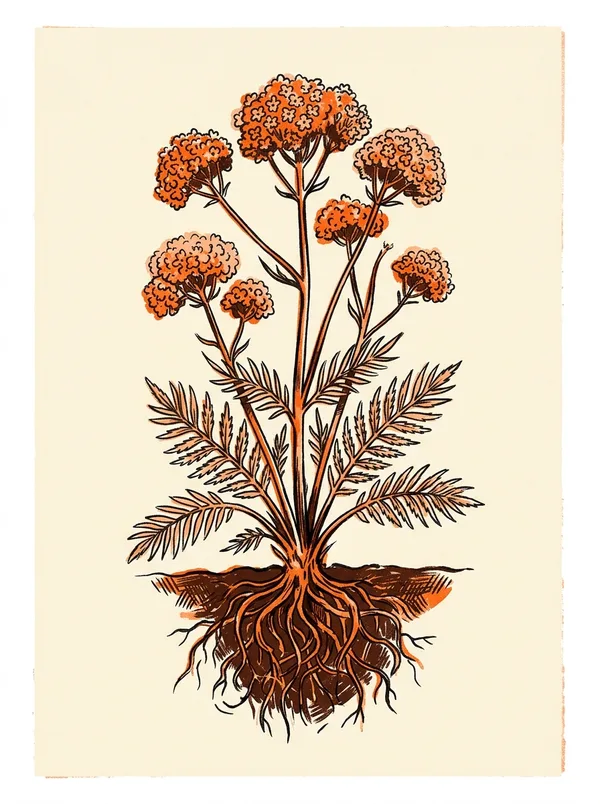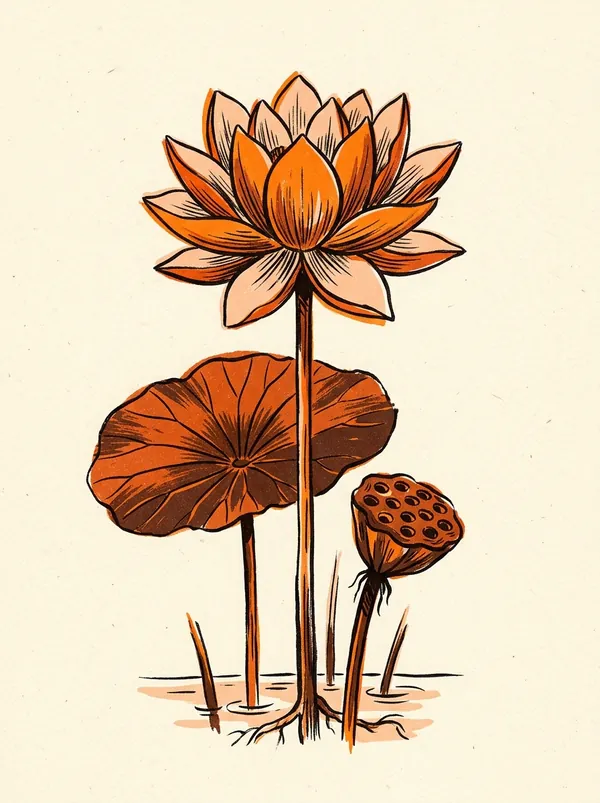
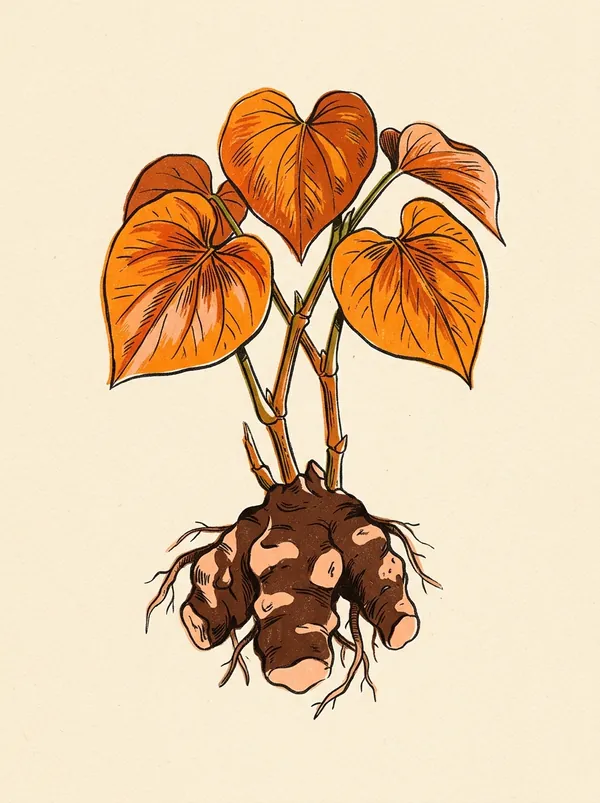
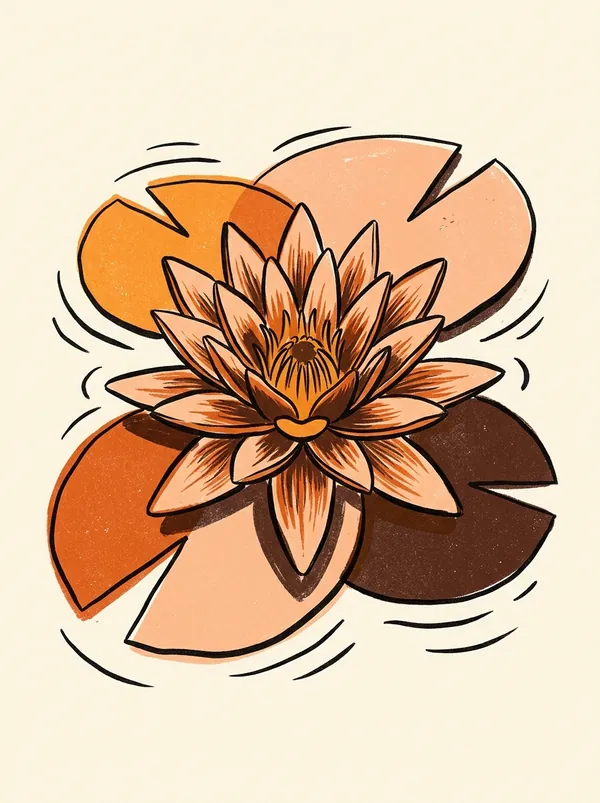
Both end up in a cup: kava as a ground-root drink, blue lotus as a flower tea. That’s about where the resemblance ends. One is a pepper relative from the Pacific, the other a water lily that borrowed the name “lotus.” The chemistry rows are lopsided: kava’s compounds are well mapped, while blue lotus’s famous ones may not be in the flower.
Side by side
| Feature | Kava | Blue lotus |
|---|---|---|
| Latin name | Piper methysticum | Nymphaea caerulea |
| Plant family / what it is | Piperaceae (pepper family); a leafy shrub | Nymphaeaceae (water lily family); not a true lotus |
| Where it grows | Pacific islands: Vanuatu, Fiji, Tonga, Samoa, Hawaii | The Nile and parts of East Africa |
| Part used | Root and lower stem | Flower |
| Main compounds researchers study | Kavalactones; six main ones, including kavain and yangonin, make up most of the total | Aporphine alkaloids (nuciferine, apomorphine) are often cited, but a 2023 lab study found them virtually absent from authentic extracts |
| History | Shared from a common bowl at welcomes and gatherings across the Pacific | Painted and carved throughout ancient Egyptian art; flowers found in Tutankhamun’s tomb |
| Common forms sold | Ground root, instant powder, shots, capsules, liquid extracts, gummies | Dried flowers for tea, tinctures, extracts, capsules, gummies |
| How it’s usually taken | Ground root mixed with water | Dried flowers steeped as tea, or as a tincture |
| Legal status in the US | Legal in all 50 states and DC; New York limits kava drinks at restaurants and bars | Not federally controlled; Louisiana lists it as a prohibited plant |
| Safety notes worth reading | Rare liver-injury reports (FDA advisory, 2002); don’t mix with alcohol | Research on the flower is limited; ask a doctor first if you take medication |
| What to check on the label | “Noble” variety, root only, kavalactone %, batch COA | Nymphaea caerulea named; flower; extract ratio; batch COA |
Which one fits what you’re after
If you care about
a ceremonial drink with a living tradition
Kava
Still served at welcomes and village gatherings across the Pacific islands
If you care about
a flower from ancient art
Blue lotus
A recurring motif in Egyptian paintings and carvings
If you care about
label standards you can compare
Kava
Kavalactone % is a common label standard; blue lotus labels mostly give ratios
What I check on the label
- Kava: “noble” and “root” spelled out, plus a kavalactone %.
- Blue lotus: Nymphaea caerulea on the panel. “Lotus” alone could mean a different plant.
- Blue lotus: big ratios like 50:1 describe concentration, not what compounds are present.
- Both: a batch COA. Louisiana residents: check state law before buying blue lotus.
Is it legal where you live? Rules for kratom and 7-OH change by state and city. Check the state-by-state map on 7-OH Laws
Common questions
Is kava the same as blue lotus?
No. Kava is a pepper-family root from the Pacific islands; blue lotus is a water lily flower from the Nile. Different families, different parts, different compounds.
Do kava and blue lotus have the same effects?
This notebook doesn’t compare effects. Here’s what the research has looked at: kava’s kavalactones are well characterized; blue lotus research is limited, and its often-cited alkaloids were virtually absent in a 2023 lab study.
Are kava and blue lotus legal?
Kava is legal in all 50 states and DC. Blue lotus isn’t federally controlled, but Louisiana lists it as a prohibited plant.
Is blue lotus a real lotus?
No. It’s a water lily (Nymphaea caerulea). True lotuses belong to a different genus, Nelumbo.
Sources (6)
— Dan
Updated by Dan Mercer.