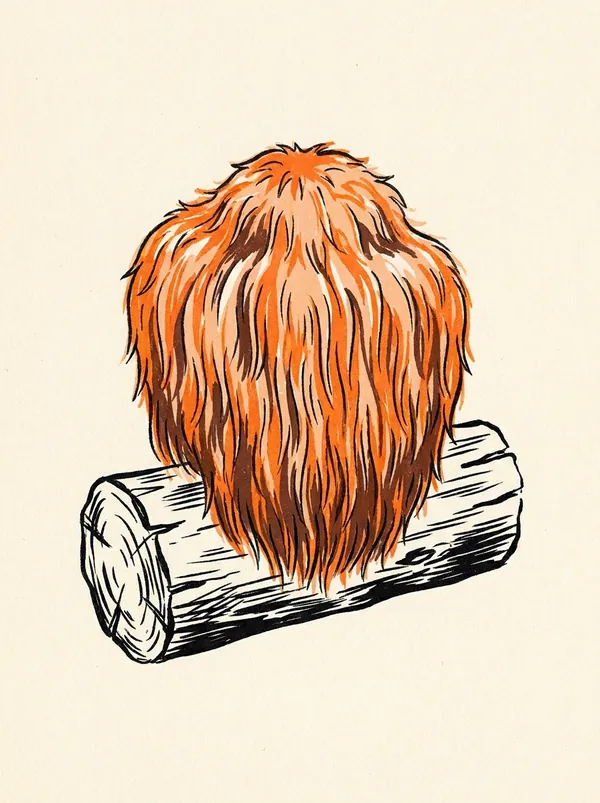
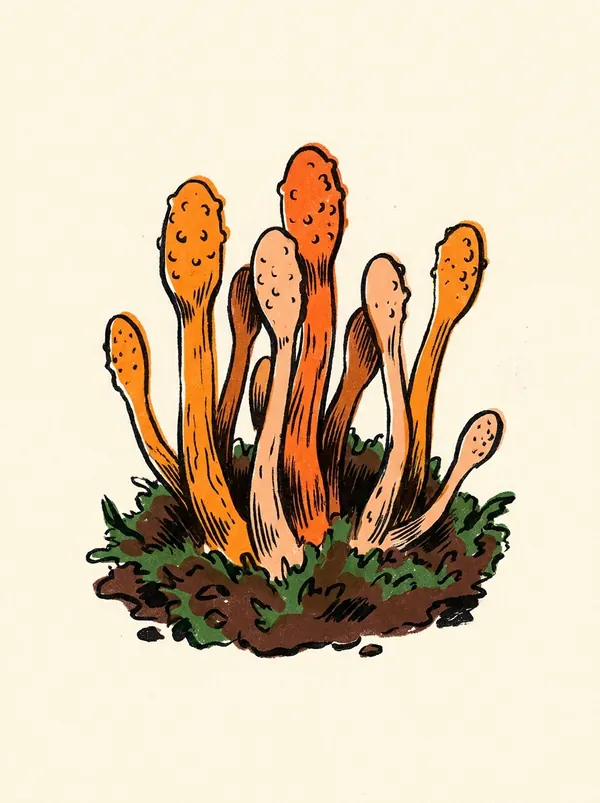
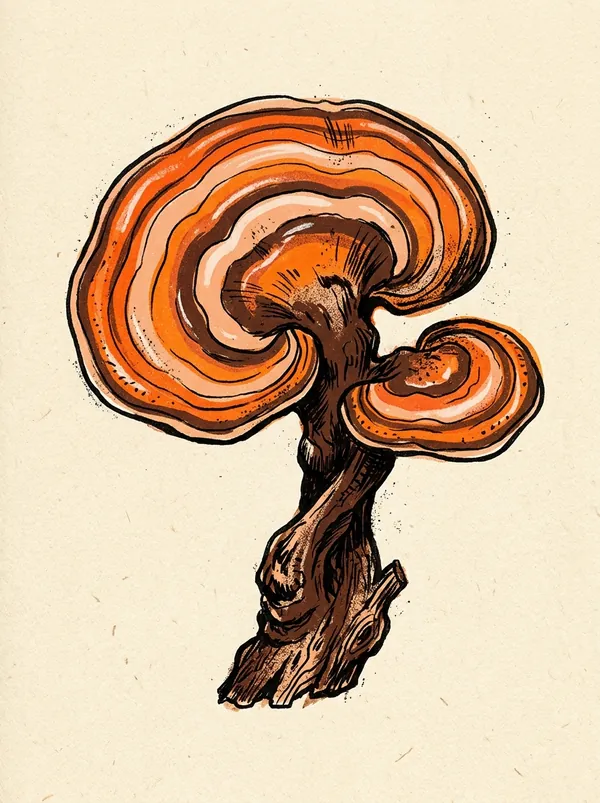
These two often share a blend, and both carry centuries of Chinese tradition, which is probably why they get compared. The organisms are nothing alike. In the wild one grows out of a buried caterpillar, the other out of a hardwood stump. For both, the first label question is the same: which species or strain, and which part of it.
Side by side
| Feature | Cordyceps | Reishi |
|---|---|---|
| Latin name | Cordyceps militaris, or Ophiocordyceps sinensis (renamed from Cordyceps sinensis in 2007) | Ganoderma lucidum (East Asian lingzhi is often named Ganoderma lingzhi) |
| Family / what it is | Cordycipitaceae / Ophiocordycipitaceae; fungi that grow on insects | Ganodermataceae; a hard, glossy red-brown shelf fungus |
| Where it grows | Wild O. sinensis: on moth larvae, high on the Qinghai-Tibetan Plateau; C. militaris is widely cultivated | On hardwood stumps and logs; most sold today is cultivated |
| What’s usually sold | Cultivated C. militaris, or fermented strains such as Cs-4 (Paecilomyces hepiali); wild O. sinensis is rare and costly | Fruiting body, mycelium and spores |
| Main compounds researchers study | Nucleosides, mainly cordycepin (3′-deoxyadenosine) and adenosine, plus polysaccharides | Triterpenes such as ganoderic acids, and beta-glucan polysaccharides |
| Common forms sold | Capsules, powders and extracts; whole dried cordyceps, wild or cultivated | Capsules, tablets, extracts, powders, teas, spore powder |
| Traditional use | Wild cordyceps has been used in traditional Chinese medicine since at least the 1400s | Lingzhi has appeared in Chinese herbal texts and art for centuries; too woody to cook, so simmered as tea |
| Legal status in the US | Sold as a dietary supplement; not controlled | Sold as a dietary supplement; not controlled |
| Safety notes worth reading | MSK: may interact with blood thinners and diabetes drugs; one case report of excessive bleeding | MSK: may raise bleeding risk with blood thinners; rare liver-injury reports; spore powder can raise the CA72-4 lab marker |
| What to check on the label | Species or strain (C. militaris, O. sinensis, Cs-4), fruiting body or mycelium, cordycepin or adenosine %, batch COA | Fruiting body, mycelium or spores; beta-glucan or triterpene %; species named |
Which one fits what you’re after
If you care about
a fungus with a strange life story
Cordyceps
Wild O. sinensis grows from moth larvae; its Chinese name means “winter worm, summer grass”
If you care about
a woody fungus brewed as tea
Reishi
Too hard to cook with; traditionally simmered in water
If you care about
labels that tell you what’s inside
Either
Species or strain named, plus which part: fruiting body, mycelium or spores
What I check on the label
- Cordyceps: which one? C. militaris, O. sinensis and Cs-4 are different organisms; the label should say.
- Reishi: fruiting body, mycelium or spores, plus a beta-glucan or triterpene %.
- Wild O. sinensis at a low price is a red flag; a 2025 review documents substitution and mislabeling.
- Both: MSK flags blood thinners, and diabetes medicine for cordyceps. Ask a doctor first if you take either.
Is it legal where you live? Rules for kratom and 7-OH change by state and city. Check the state-by-state map on 7-OH Laws
Common questions
Is cordyceps the same as reishi?
No. Cordyceps are insect-borne fungi (Cordyceps militaris, Ophiocordyceps sinensis); reishi is Ganoderma lucidum, a shelf fungus that grows on hardwood. Different families, different compounds.
What is cordycepin?
A nucleoside closely related to adenosine (it’s 3′-deoxyadenosine), isolated from Cordyceps militaris. Reishi research centers on different compounds: triterpenes and beta-glucans.
Do cordyceps and reishi have the same effects?
This notebook doesn’t compare effects. Here’s what research has looked at: cordyceps mainly for cordycepin, adenosine and polysaccharides; reishi for triterpenes and beta-glucans.
Are cordyceps and reishi legal?
Yes. Both are sold as dietary supplements in the US and neither is a controlled substance.
Sources (8)
- Memorial Sloan Kettering, About Herbs: Cordyceps
- Yang & Jin 2026, Cordyceps militaris and its constituents: a review (Phytother Res)
- Zhou et al. 2014, Artificial cultivation of Ophiocordyceps sinensis in China (Crit Rev Biotechnol)
- Meng et al. 2025, Chinese cordyceps products and authenticity assessment (Crit Rev Biotechnol)
- Yao et al. 2026, Paecilomyces hepiali Chen (Cs-4) polysaccharides (J Ethnopharmacol)
- PubChem: Cordycepin
- Memorial Sloan Kettering, About Herbs: Reishi
- Galappaththi et al. 2022, Ganoderma triterpenoids review (Biomolecules)
— Dan
Updated by Dan Mercer.