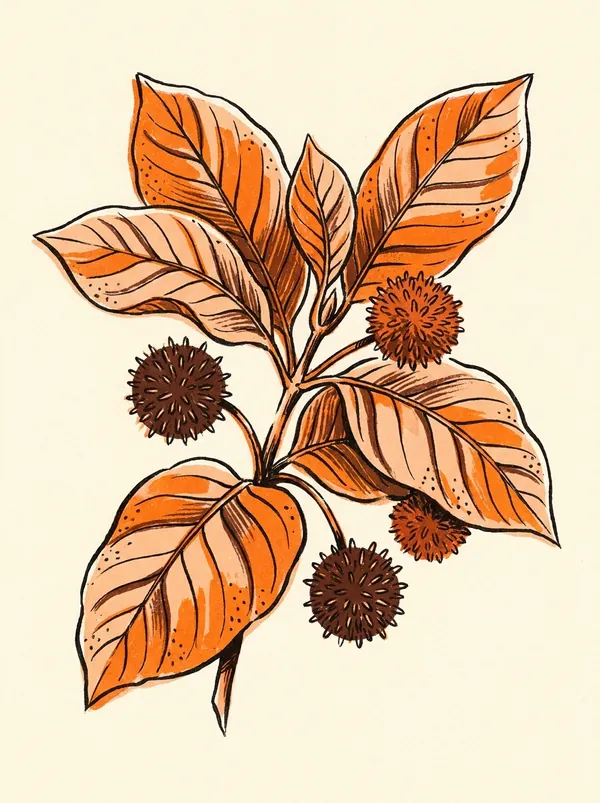
Both get described as “alkaloid plants,” both end up as extracts and capsules, and both names start with K, which seems to be enough for the internet. Under the label they share almost nothing: different continents, different plant families, different alkaloids. The legal rows are where they split hardest, so I’d read those first.
Side by side
| Feature | Kanna | Kratom |
|---|---|---|
| Latin name | Sceletium tortuosum | Mitragyna speciosa |
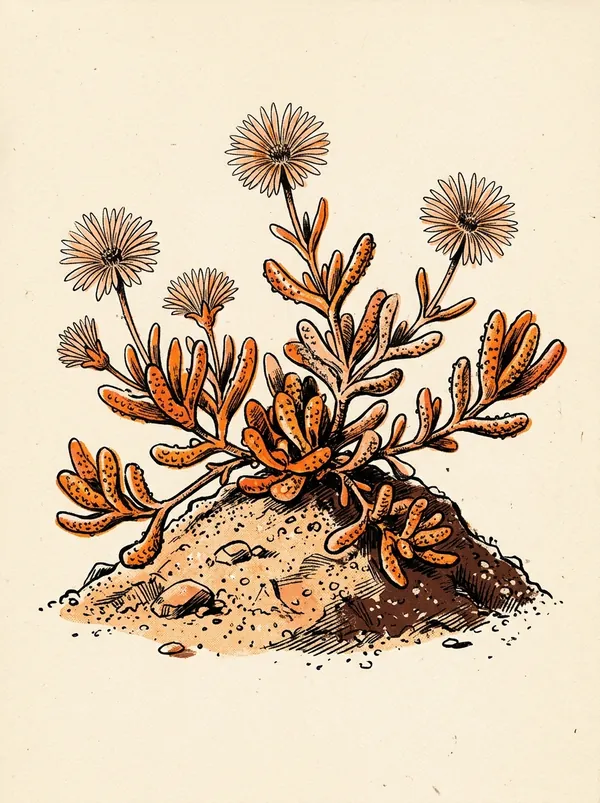
| Plant family / what it is | Aizoaceae (ice plant family); a low succulent | Rubiaceae (coffee family); a tropical tree |
| Where it grows | South Africa, mainly the dry Karoo region | Thailand, Malaysia, Indonesia, Papua New Guinea |
| Part used | Above-ground parts, traditionally fermented and dried | Leaf |
| Main compounds researchers study | Mesembrine-type alkaloids; a 2022 review counted 25 alkaloids in four classes | Indole alkaloids, mainly mitragynine; 7-OH in trace amounts |
| Common forms sold | Fermented dried plant, extracts, capsules, tablets, gummies | Leaf powder, capsules, liquid extracts, shots |
| How it’s usually taken | Traditionally chewed by San and Khoikhoi peoples; today mostly sold as extracts | Fresh leaves traditionally chewed or brewed as tea in Southeast Asia |
| Federal status | Not federally controlled | Not federally scheduled; the FDA says it can’t be sold as a dietary supplement or food ingredient |
| Legal status by state (Nov 2026) | Restricted in Louisiana only | Banned in 11 states; many others set age limits or product rules |
| What to check on the label | Extract ratio or alkaloid %, fermented or not, batch COA | Whether it’s legal in your state; Latin name; COA listing mitragynine and 7-OH |
Which one fits what you’re after
If you care about
a documented history in Southern Africa
Kanna
San and Khoikhoi use was written down by European travelers in the 1600s
If you care about
a leaf with a Southeast Asian tradition
Kratom
Fresh leaves were traditionally chewed or brewed as tea
If you care about
the simpler legal picture
Kanna
Restricted only in Louisiana; kratom is banned in 11 states
What I check on the label
- Kanna: an extract ratio (like 10:1) or a standardized alkaloid %, and whether the plant was fermented.
- Kratom: Latin name Mitragyna speciosa and a COA that lists mitragynine and 7-OH separately.
- A “kratom” product that lists 7-OH as its own ingredient is a different product.
- Both: a batch COA. Kanna: not with antidepressants or other serotonergic drugs; ask a doctor first.
Is it legal where you live? Rules for kratom and 7-OH change by state and city. Check the state-by-state map on 7-OH Laws
Common questions
Is kanna the same as kratom?
No. Kanna is a South African succulent (Sceletium tortuosum); kratom is a Southeast Asian tree leaf (Mitragyna speciosa). Different plant families, different alkaloids.
Do kanna and kratom have the same effects?
This notebook doesn’t compare effects. Here’s what each is: kanna is studied for mesembrine-type alkaloids, kratom for mitragynine and, in trace amounts, 7-OH. They are different alkaloids from unrelated plants.
Does kanna contain mitragynine or 7-OH?
It isn’t a known source of either; those are kratom alkaloids. Kanna’s best-studied alkaloids are mesembrine, mesembrenone and mesembrenol.
Is kanna legal where kratom is banned?
Mostly, yes. As of Nov 2026 kanna is restricted only in Louisiana, which also bans kratom. Kratom is banned in 11 states; see 7ohlaws.com/kratom/ and /kanna/ for your state.
Sources (6)
— Dan
Updated by Dan Mercer.