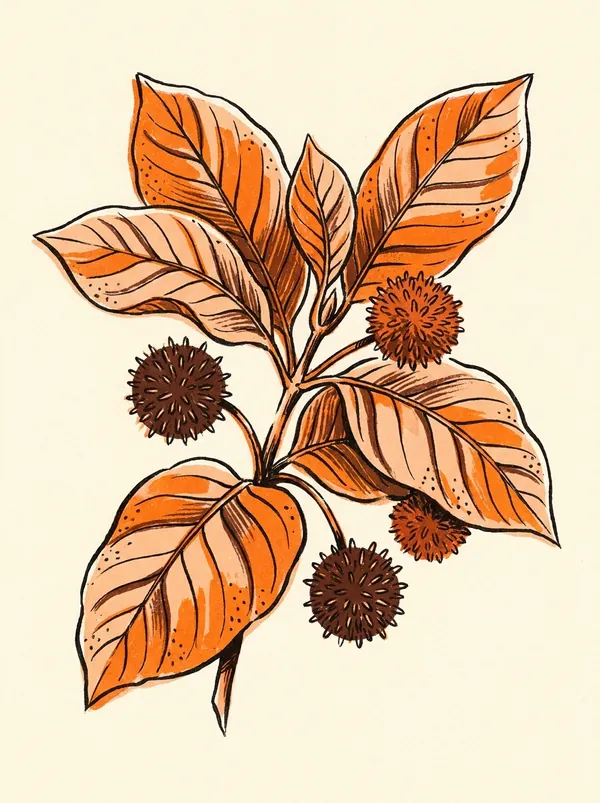
Both are alkaloid-heavy, both come from Asia, and corydalis has “poppy” in its family name, which makes people nervous. I lined them up to separate the families, the alkaloid classes and the legal lines. Corydalis is a poppy relative but not an opium poppy; kratom is a coffee relative. Neither name tells you much on its own.
Side by side
| Feature | Corydalis | Kratom |
|---|---|---|
| Latin name | Corydalis yanhusuo | Mitragyna speciosa |
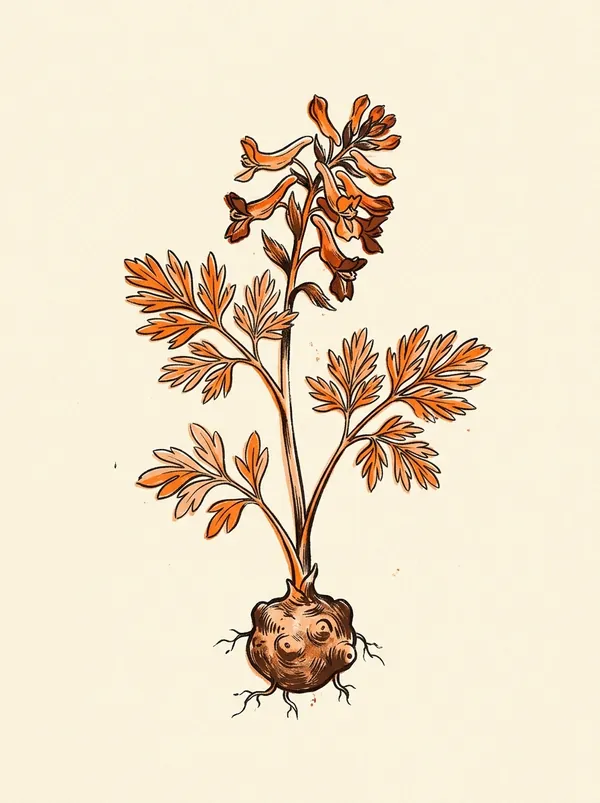
| Plant family / what it is | Papaveraceae (poppy family); a small spring flower, not an opium poppy | Rubiaceae (coffee family); a tropical tree |
| Where it grows | Eastern China; grown commercially in Zhejiang province | Thailand, Malaysia, Indonesia, Papua New Guinea |
| Part used | Tuber (a small round underground root), dried | Leaf |
| Main compounds researchers study | Isoquinoline alkaloids; a 2023 review lists 84, with tetrahydropalmatine (THP) the best known | Indole alkaloids, mainly mitragynine; 7-OH in trace amounts |
| Common forms sold | Dried tuber slices, extracts, capsules, and in some botanical tablet blends | Leaf powder, capsules, liquid extracts, shots |
| How it’s usually taken | Dried tuber as part of traditional Chinese herbal formulas | Fresh leaves traditionally chewed or brewed as tea in Southeast Asia |
| FDA position | Sold as a dietary supplement | Not approved for any use; the FDA says it can’t be sold as a dietary supplement |
| Legal status in the US (Nov 2026) | Not a controlled substance | Not federally scheduled; banned in 11 states, regulated in many more |
| What to check on the label | Latin name, tuber, extract ratio, each extract’s amount in blends, batch COA | Whether it’s legal in your state; Latin name; COA listing mitragynine and 7-OH |
Which one fits what you’re after
If you care about
a plant from Chinese herbal tradition
Corydalis
Yan hu suo appears in classical Chinese herbal texts
If you care about
a leaf with a Southeast Asian tradition
Kratom
Fresh leaves were traditionally chewed or brewed as tea
If you care about
the simpler legal picture
Corydalis
Not a controlled substance; kratom is banned in 11 states
What I check on the label
- Corydalis: Corydalis yanhusuo and “tuber” named; other Corydalis species exist.
- Corydalis in blends: each extract’s amount listed, not one blend total.
- Kratom: Latin name Mitragyna speciosa and a COA that lists mitragynine and 7-OH separately.
- Corydalis: case reports link THP-containing products to liver problems. Ask a doctor first if you take medication.
Is it legal where you live? Rules for kratom and 7-OH change by state and city. Check the state-by-state map on 7-OH Laws
Common questions
Is corydalis the same as kratom?
No. Corydalis yanhusuo is a poppy-family flower whose tuber is used; kratom is a coffee-family tree leaf. Their main alkaloids belong to different classes.
Is corydalis related to the opium poppy?
It’s in the same family, Papaveraceae, but a different genus. Corydalis yanhusuo is not an opium poppy.
Do corydalis and kratom have the same effects?
This notebook doesn’t compare effects. Here’s what the research has looked at: corydalis for isoquinoline alkaloids such as THP, kratom for indole alkaloids, mainly mitragynine.
Is corydalis legal where kratom is banned?
Yes. Corydalis is sold as a dietary supplement and isn’t a controlled substance. As of Nov 2026, kratom is banned in 11 states; see 7ohlaws.com/kratom/ for your state.
Sources (6)
— Dan
Updated by Dan Mercer.