Hirsuta often gets sold as the kratom relative without the kratom chemistry, and 7-OH is the compound regulators are watching most closely. So the question I keep seeing is simple: does hirsuta have 7-OH? The older papers and the newest one don’t agree, and the only thing that settles it for a given batch is the lab report.
Side by side
| Feature | Mitragyna hirsuta | 7-OH |
|---|---|---|
| Latin / chemical name | Mitragyna hirsuta | 7-hydroxymitragynine |
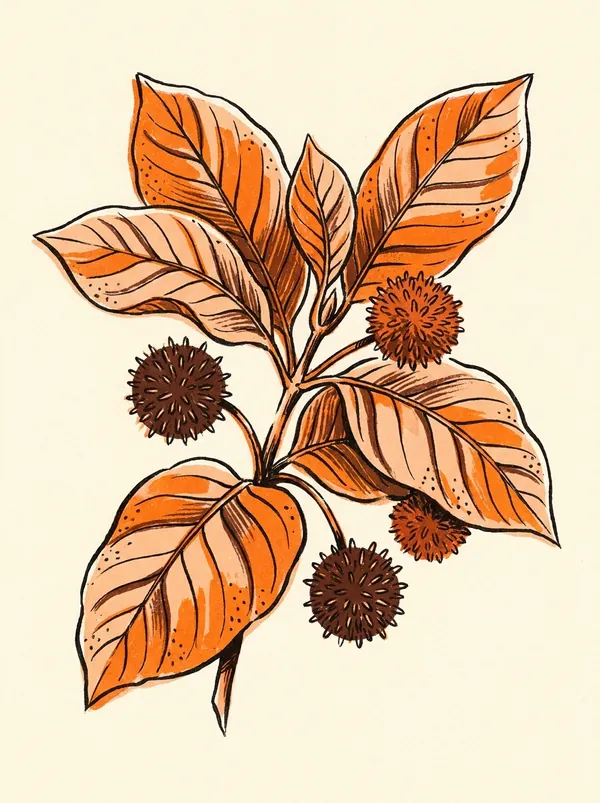
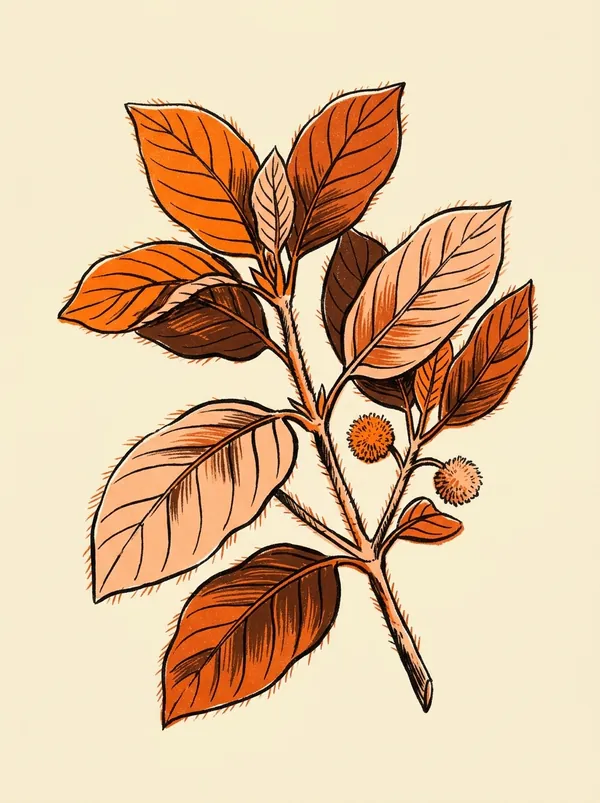
| What it is | A tree in the coffee family (Rubiaceae), same genus as kratom; fine hairs on its leaves | One alkaloid, not a plant |
| Where it comes from | Thailand and mainland Southeast Asia; Thai name kra thum khok | Trace amounts in kratom leaf; most products are concentrated or semi-synthetic |
| Part used | Leaf | None: it’s an isolated or converted compound |
| What labs have found | 1960s leaf studies: mainly oxindoles (mitraphylline, rhynchophylline and their isomers); a 2025 GC-MS study detected mitragynine, 7-OH and mitraphylline in leaf extracts | Under 2% of kratom’s total alkaloids, or a trace (DEA, 2026); can be made from mitragynine in one chemical step |
| Is it 7-OH-free? | Not automatically; only a batch COA with a 7-OH result can say | No: it is the compound itself |
| How much research exists | A handful of papers | A growing body of lab, metabolism and regulatory work |
| Common forms sold | Leaf powder, extracts, chewable tablets (sometimes blended) | Tablets, gummies, drink mixes and shots (as listed by the FDA) |
| Federal status (Nov 2026) | Not federally controlled | Not yet scheduled; FDA recommended scheduling in July 2025, and DEA proposed control above a threshold in Oct 2026 |
| DEA’s proposed test | Based on 7-OH and MP amounts, not on which plant a product is labeled as | Covered if 7-OH (plus any MP) is over 1 mg per gram or per mL, or if mitragynine is less than 100 times the 7-OH |
| State status (Nov 2026) | Rules vary; some state laws name kratom’s alkaloids rather than the plant | Banned in 16 states and DC; many others set age limits or caps |
| Safety notes worth reading | Little human data; in the 2025 study a hexane leaf extract of hirsuta caused DNA damage in a lab cell test | The FDA warned in July 2025 that products containing 7-OH can cause serious harm |
| What to check on the label | Full Latin name; COA with mitragynine and 7-OH results (numbers or “ND”) | First, whether it’s legal where you are; then the 7-OH amount and a batch COA |
Which one fits what you’re after
If you care about
a plant rather than a single compound
Mitragyna hirsuta
A Thai tree leaf; 7-OH is one alkaloid sold on its own
If you care about
where federal action is aimed
7-OH
FDA recommended scheduling in July 2025; 16 states and DC ban it
If you care about
knowing whether a batch has 7-OH
Either: the COA
A lab report with a 7-OH number (or “ND”) beats any front-of-pack claim
What I check on the label
- Hirsuta: the full Latin name, Mitragyna hirsuta, not just a nickname.
- “7-OH-free” on a hirsuta label needs a batch COA that tests 7-OH and shows a result, not just “pass.”
- The same COA should list mitragynine. A 2025 study found both in hirsuta leaf extracts.
- 7-OH: first check whether it’s legal in your state this month; 7ohlaws.com keeps a dated list.
Is it legal where you live? Rules for kratom and 7-OH change by state and city. Check the state-by-state map on 7-OH Laws
Common questions
Is Mitragyna hirsuta the same as 7-OH?
No. Mitragyna hirsuta is a Thai tree whose leaf is sold as a botanical. 7-OH is a single alkaloid, mostly sold concentrated or semi-synthetic.
Does Mitragyna hirsuta contain 7-OH?
It can. Older leaf studies reported mainly oxindole alkaloids, but a 2025 Thai GC-MS study detected mitragynine and 7-OH in hirsuta leaf extracts, and in three other Mitragyna species. A hirsuta product isn’t automatically 7-OH-free; the batch COA should show 7-OH and mitragynine results.
Is Mitragyna hirsuta legal where 7-OH is banned?
Hirsuta itself isn’t federally controlled, but some state laws name kratom’s alkaloids rather than the plant, so a product that contains 7-OH may be covered. As of Nov 2026, 7-OH is banned in 16 states and DC; see 7ohlaws.com/7-oh/.
Is 7-OH legal?
As of Nov 2026 it is not federally scheduled, but the FDA recommended scheduling in July 2025 and the DEA proposed control above a threshold in Oct 2026. See 7ohlaws.com/federal/ for the latest.
Sources (10)
- Shellard et al. 1967, The alkaloids of the leaves of Mitragyna hirsuta (Planta Med)
- Sudmoon et al. 2025, Rhynchophylline and mitraphylline in Thai Mitragyna species (Sci Rep)
- Tungphatthong et al. 2021, Telling kratom from other Thai Mitragyna species (Sci Rep)
- FDA consumer update: Products containing 7-OH can cause serious harm (July 2025)
- FDA press release: FDA takes steps to restrict 7-OH products (July 29, 2025)
- Federal Register 2026-20943 (Oct 14, 2026): DEA notice of intent, 7-OH and mitragynine pseudoindoxyl above a threshold
- Alsbrook et al. 2025, From kratom to 7-hydroxymitragynine (Pharm Biol)
- 7-OH Laws: 7-OH by state
- 7-OH Laws: kratom by state
- 7-OH Laws: the federal file
— Dan
Updated by Dan Mercer.