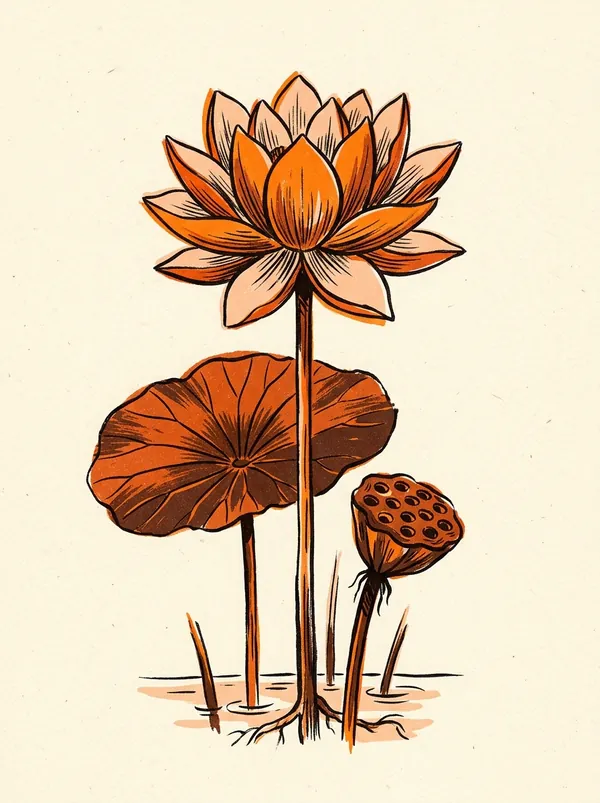
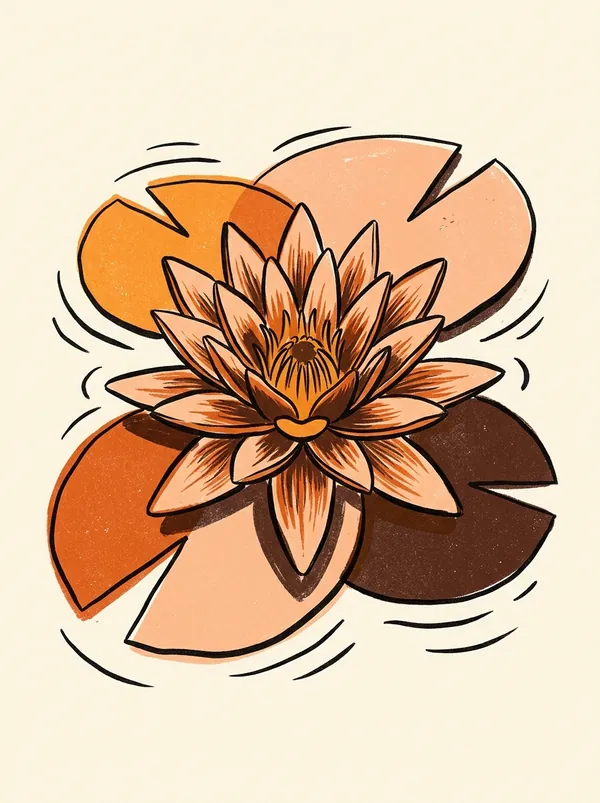
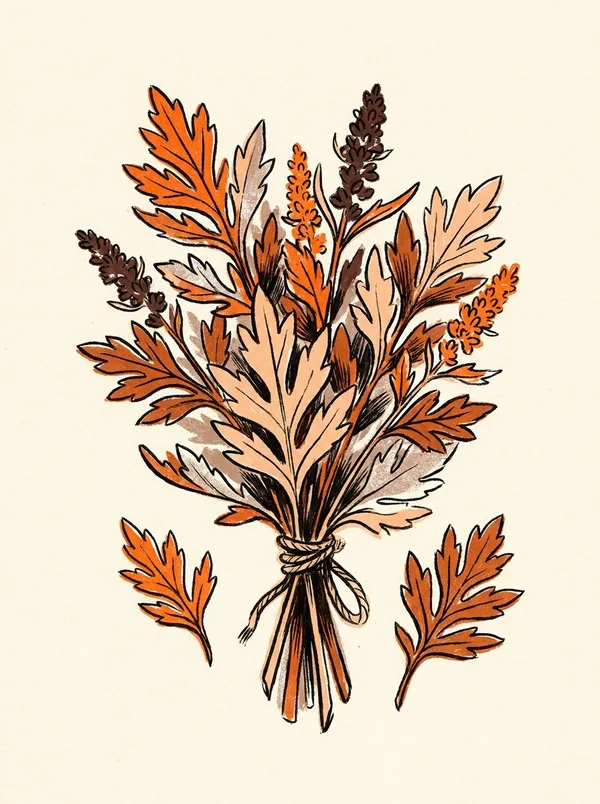
These two show up in the same loose-herb listings, usually as dried flowers or leaves for tea, and both come with plenty of folklore. Botanically they’re far apart: one floats on the Nile, the other spreads easily wherever it lands. The rows I found most useful were the less romantic ones: what’s actually been measured in each, and a pollen note that matters for anyone with hay fever.
Side by side
| Feature | Blue lotus | Mugwort |
|---|---|---|
| Latin name | Nymphaea caerulea | Artemisia vulgaris |
| Plant family / what it is | Nymphaeaceae (water lily family); not a true lotus | Asteraceae (daisy family); a leafy herb in the same genus as wormwood |
| Where it grows | The Nile and parts of East Africa | Native to Europe and parts of Asia and Africa; now widespread, including North America |
| Part used | Flower | Above-ground parts, cut at the start of flowering |
| Main compounds researchers study | Aporphines (nuciferine, apomorphine) are often cited, but a 2023 GC-MS study found them virtually absent from authentic extracts | Essential oil (1,8-cineole, camphor, sabinene, thujone), flavonoids and sesquiterpene lactones; the mix varies a lot by origin |
| Food and flavor use | Mainly sold as dried flowers for tea | A culinary herb in parts of Asia, and a beer flavoring before hops; US flavoring rules allow Artemisia only if the finished food is thujone-free |
| History | Painted and carved throughout ancient Egyptian art; flowers found in Tutankhamun’s tomb | Called “mother of herbs” in the Middle Ages; its dried leaves are the “moxa” burned in moxibustion |
| Common forms sold | Dried flowers for tea, tinctures, extracts, capsules, gummies | Dried herb for tea, tinctures, moxa sticks |
| Legal status in the US | Not federally controlled; on Louisiana’s prohibited-plant list | Not federally controlled; also on Louisiana’s prohibited-plant list |
| Safety notes worth reading | Research on the flower is limited; ask a doctor first if you take medication | NCCIH: not for use in pregnancy; little is known about breastfeeding. Its pollen is a major hay-fever allergen in northern Europe and North America |
| What to check on the label | Nymphaea caerulea named; flower; extract ratio; batch COA | Artemisia vulgaris named (other Artemisia species are sold too); plant part; batch COA |
Which one fits what you’re after
If you care about
a flower from ancient art
Blue lotus
A recurring motif in Egyptian paintings and carvings
If you care about
an herb with a kitchen history
Mugwort
Used as a spice in Asian cooking and to flavor beer before hops
If you care about
the legal picture
Both: same caveat
Neither is federally controlled, and Louisiana lists both as prohibited plants
What I check on the label
- Blue lotus: Nymphaea caerulea on the panel. “Lotus” alone could mean a different plant.
- Mugwort: Artemisia vulgaris named. Wormwood and other Artemisia species are different plants.
- Mugwort: NCCIH says not during pregnancy. Ask a doctor first if you’re pregnant or breastfeeding.
- Both: a batch COA. Louisiana residents: check state law before buying either.
Is it legal where you live? Rules for kratom and 7-OH change by state and city. Check the state-by-state map on 7-OH Laws
Common questions
Is blue lotus the same as mugwort?
No. Blue lotus is a Nile water lily (Nymphaea caerulea); mugwort is a daisy-family herb (Artemisia vulgaris). Different families, different parts, different compounds.
Do blue lotus and mugwort have the same effects?
This notebook doesn’t compare effects. Here’s what research has looked at: NCCIH notes very little research on mugwort in people, and most work is on its essential oil and extracts in the lab; blue lotus research is limited, and its often-cited alkaloids were virtually absent in a 2023 lab study.
Does mugwort contain thujone?
Some samples do. Thujone is one of the essential-oil compounds reported in mugwort, and the mix varies a lot by where the plant grew. FDA’s flavoring rules allow Artemisia species in food only if the finished food is thujone-free.
Are blue lotus and mugwort legal?
Neither is federally controlled in the US. Louisiana’s prohibited-plant law names both, with exceptions such as decorative growing.
Sources (6)
— Dan
Updated by Dan Mercer.