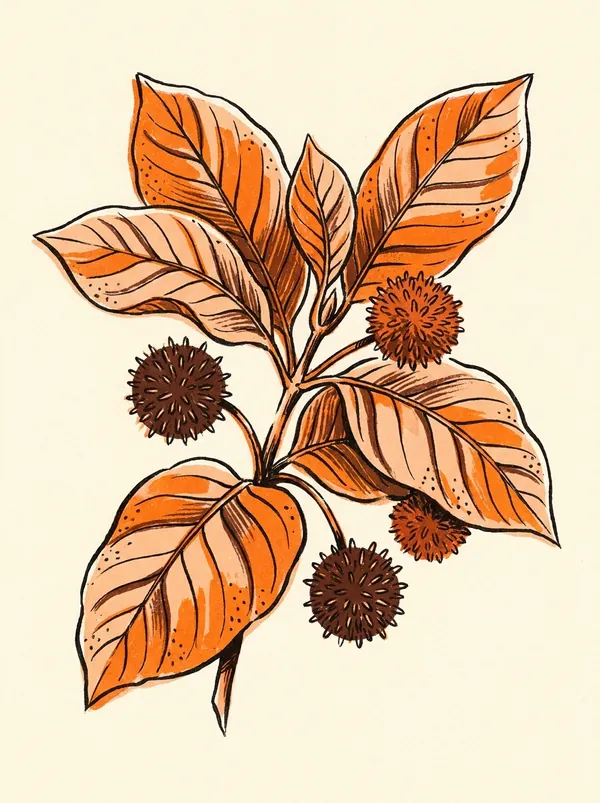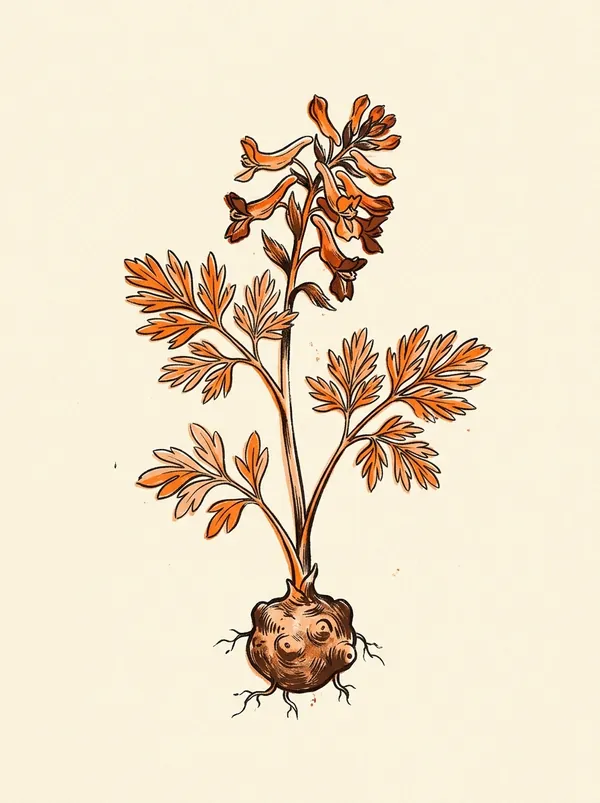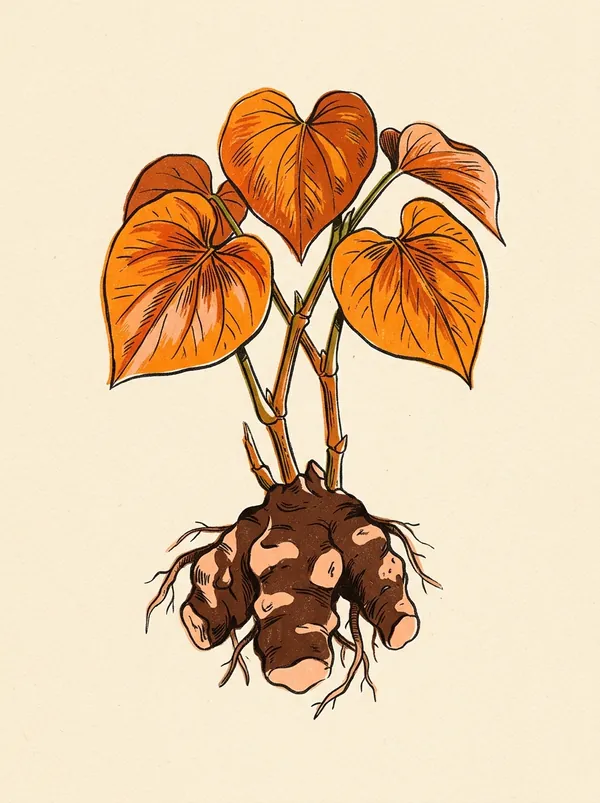
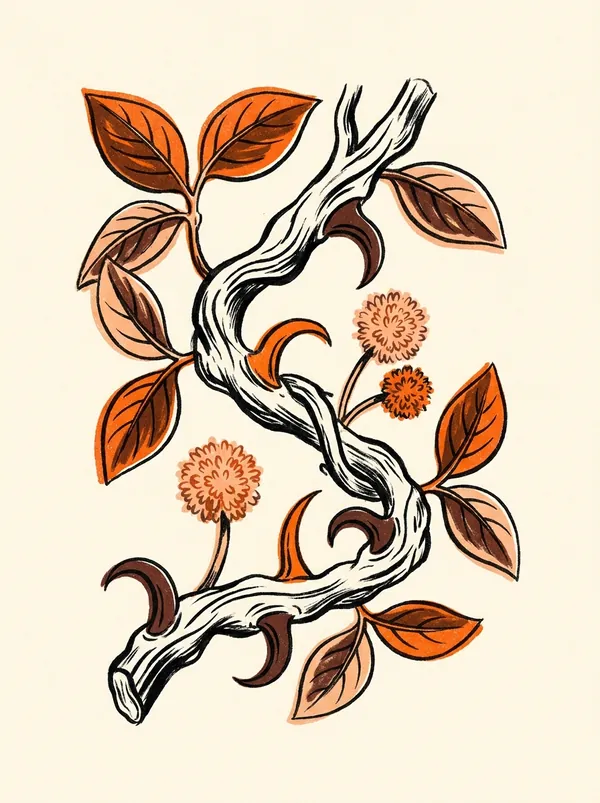
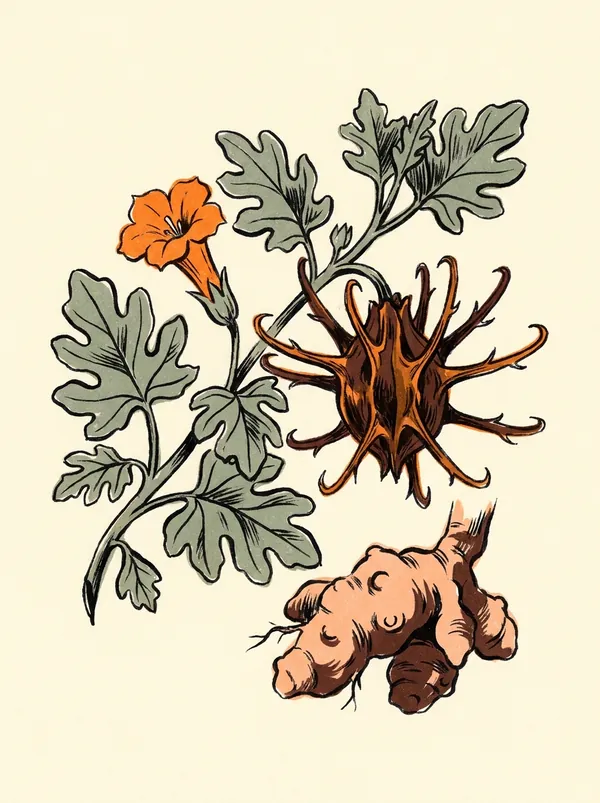
Two claws, two continents, zero relation. These get swapped in conversation and occasionally on shop shelves, so I lined them up row by row. The cleanest tell is the Latin name; the second-cleanest is the part used. One is bark from a climbing vine, the other a dried slice of underground tuber from the edge of the Kalahari.
Side by side
| Feature | Cat’s claw | Devil’s claw |
|---|---|---|
| Latin name | Uncaria tomentosa (sometimes Uncaria guianensis) | Harpagophytum procumbens (sometimes Harpagophytum zeyheri) |
| Plant family / what it is | Rubiaceae (coffee family); a woody climbing vine | Pedaliaceae; named for its hooks (an 1822 account called it the “grapple plant”) |
| Where it grows | Amazon rainforest and other tropical Central and South America | Southern Africa, including the Kalahari; most exports come from Namibia |
| Part used | Inner bark, sometimes root | Secondary root tubers, sliced and dried |
| Main compounds researchers study | Oxindole alkaloids: mitraphylline, rhynchophylline and others | Iridoid glycosides, mainly harpagoside, plus harpagide and procumbide (not alkaloids) |
| Common forms sold | Tea-cut bark, capsules, extracts, chewable tablets | Dried tuber slices, capsules, tablets, extracts |
| How it’s usually taken | Bark brewed as tea by Amazonian peoples, including the Asháninka of Peru | Tubers brewed as infusions by Nama, Herero and other peoples of the region |
| Legal status in the US | Sold as a dietary supplement; not a controlled substance | Sold as a dietary supplement; not a controlled substance |
| Safety notes worth reading | NCCIH: ask a doctor first with autoimmune conditions, blood thinners or blood-pressure medicine; may be unsafe in pregnancy | MedlinePlus: avoid in pregnancy and with gallstones or stomach ulcers; may interact with warfarin and acid reducers |
| What to check on the label | Species named, inner bark, extract ratio or alkaloid %, batch COA | Species named, secondary tuber, harpagoside %, batch COA |
Which one fits what you’re after
If you care about
a plant from the Amazon
Cat’s claw
A rainforest vine; locally called uña de gato
If you care about
a plant from southern Africa
Devil’s claw
Harvested mostly in Namibia, with smaller exports from Botswana and South Africa
If you care about
a label number you can compare
Devil’s claw
Harpagoside % is the usual marker; cat’s claw labels vary more
What I check on the label
- The Latin name settles it: Uncaria for cat’s claw, Harpagophytum for devil’s claw.
- Devil’s claw: two species are traded under the name; a 2021 review notes early records rarely told them apart.
- Devil’s claw: a harpagoside % on the panel, and “secondary tuber” as the part.
- Both: a batch COA. Both carry interaction notes, so ask a doctor first if you take medication.
Is it legal where you live? Rules for kratom and 7-OH change by state and city. Check the state-by-state map on 7-OH Laws
Common questions
Is cat’s claw the same as devil’s claw?
No. Cat’s claw (Uncaria tomentosa) is an Amazon vine in the coffee family; devil’s claw (Harpagophytum procumbens) is a southern African plant in the family Pedaliaceae. Different parts, different compounds.
What is harpagoside?
An iridoid glycoside, the compound most often used as a quality marker for devil’s claw. A 2021 review notes it hasn’t been settled whether it’s the only active compound.
Which part of devil’s claw is used?
The secondary root tubers, which are sliced and dried. Cat’s claw products use the inner bark, sometimes the root.
Are cat’s claw and devil’s claw legal?
Yes. In the US both are sold as dietary supplements and neither is a controlled substance.
Sources (6)
— Dan
Updated by Dan Mercer.